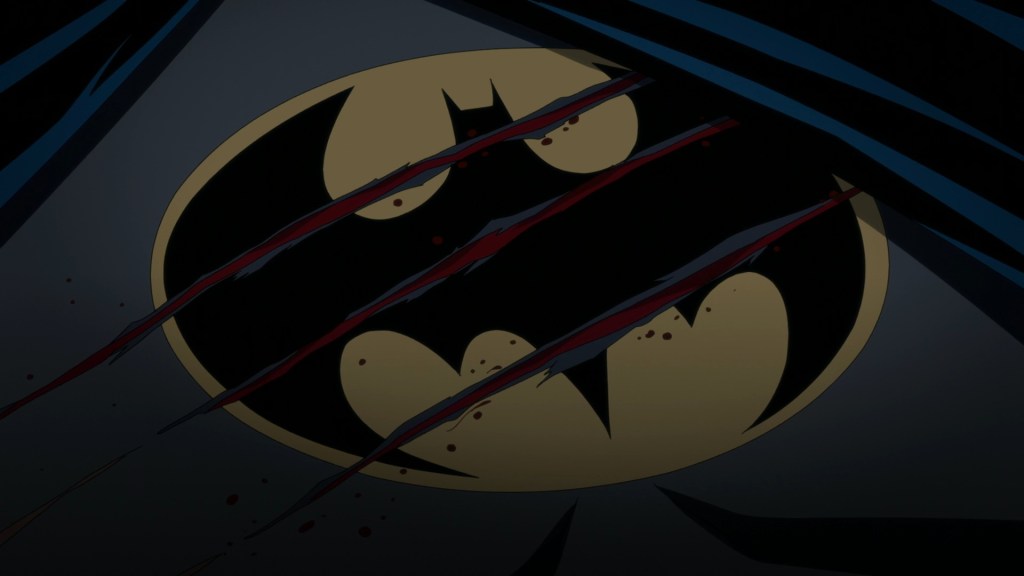
As a postscript to the recent discussion of adaptations, let’s look at how the latest DC animated film adapting a famous comic work passes the smell test! Does Batman: Knightfall (Part One – Knightfall) save Donovan’s fandom…or destroy it?!
THE STORY THUS FAR…
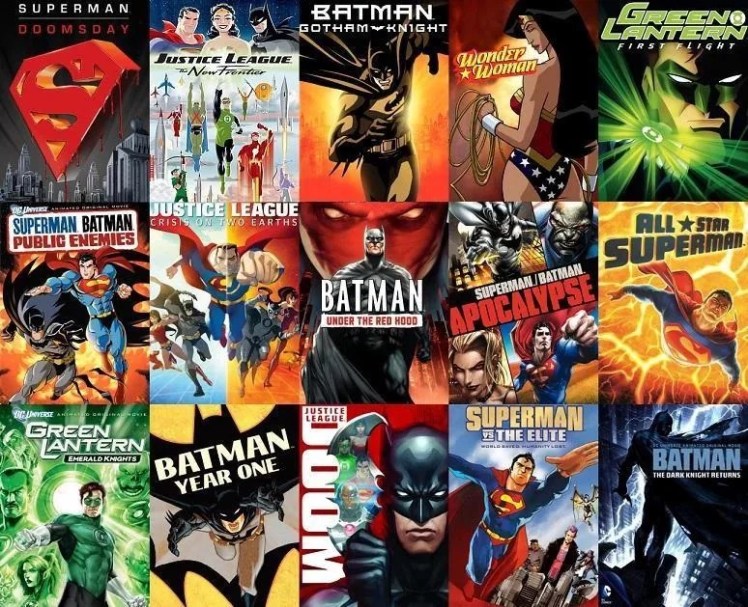
It’s been twenty years since the DC Animated Universe – the collection of comic-based animated shows produced by Bruce Timm beginning in 1992 with Batman: The Animated Series and ending in 2006 with Justice League: Unlimited – was replaced with a series of direct-to-video films. Aimed at older audiences, many of the movies sought to adapt famous comic book storylines, unencumbered by the constraints of Broadcast Standards and Practices. Compared to those successful TV series’, the DCDTVs have not enjoyed the same acclaim. Superman: Doomsday began the line with a muddied attempt to pair down fifty issues and 1,400 pages of material into a 70-minute movie. Subsequent efforts would bear stronger results (Justice League: The New Frontier is still too condensed but decently adapted, and both Superman/Batman: Public Enemies and Superman/Batman: Apocalypse are perfectly serviceable in translating perfectly serviceable stories nearly one-to-one), but in the years that followed, the most successful film by way of its cultural imprint has been 2010’s Batman: Under the Red Hood.
In this, writer Judd Winnick adapted his 2005-2006 run on the Batman title where one of the Sacred Cows of Comics – Dead Robin #2 – was resurrected in the guise of the violent vigilante Red Hood. The film is notable for not simply being another instance of a writer relaying his own work for a different medium, but actually kickstarting what has resulted in a massive fan resurgence for the character of Jason Todd. Personified by Jensen Ackles’s gruff yet wounded performance, the movie became the basis for which all future Jason Todd presentations would take inspiration, rescuing his comic counterpart from a miasma of confused, go-nowhere plots and positioning him as a prodigal son in the Bat-Canon who embodies the Hurt/Comfort tag on Ao3.org. Beyond that, it provided fans both new and old a succinct, clear understanding of the events and emotional resonance of the original comic arc, shining a light on the different dimensions stories like these often afford characters outside the parameters of typical comic book media. In short, it was the ideal comic book adaptation.
Other popular stories would be adapted in the DCDTV line, with varying results. Batman: The Dark Knight Returns may be the line’s most generally respected release regarding how closely it stuck to the text of the original classic (despite missing the mark on the feel of the book, as discussed earlier this year). Personally, I was impressed with a few of the DC Animated Movie Universe’s (or, DCAMU for short, referring to the films largely produced by James Tucker set under the same continuity initially reflecting the New 52 versions of the DC Heroes) takes on certain stories, like the second attempt at adapting The Death and Return of Superman, and Teen Titans: The Judas Contract. Neither were as panel-to-page accurate as Dark Knight Returns or Under the Red Hood, but they approximated the vibe of those classic stories, exemplifying what made those sagas work and doing their best to bring them into the new millennium.
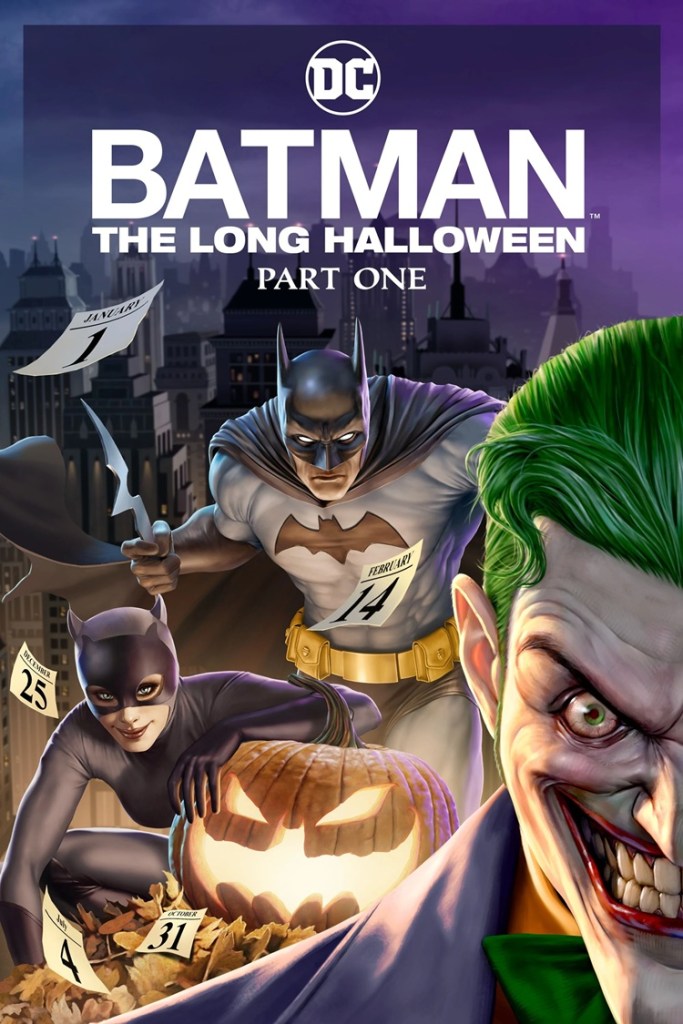
Conversely, the next set of films following the DCAMU known colloquially as the “Tomorrowverse” (beginning with Superman: Man of Tomorrow, you see) would be viewed as a fallow period in Warner Bros’ animated output. I checked out early after viewing Part One of their adaptation of the seminal Jeph Loeb and Tim Sale miniseries Batman: The Long Halloween. One of the all-time classics of the past thirty years, I couldn’t get past how its stilted animation and rejection of noirish mood betrayed a disinterest of bringing Tim Sale’s unforgettable artwork to animated life. Long Halloween isn’t even in my top ten list of favorite Batman stories, but its reputation casts such a long shadow, wouldn’t you be excited to work on it if you got the chance?
The Tomorrowverse ended with an ambitious, or audacious, attempt to adapt a cornerstone of DC Comics storytelling in a three-part trilogy of films covering the events of Crisis on Infinite Earths. Beaten to the punch five years earlier by a far more appreciable effort in the live action DC CW “Arrowverse” of shows, Crisis felt more than a little bit as though it were cribbing off of the trend created by the MCU’s Multiverse Saga, itself chasing the success of the Spiderverse films. Truth be told, I didn’t watch any of these flicks beyond the odd clip of Batman (played, funnily enough, by Jensen Ackles) being a dick to various members of the Bat-Family from across the Multiverse. The big takeaway most of my clan came away with was the final recorded scene of Batman as played by Kevin Conroy in a superlative bit of serendipity, performed just before his untimely death in 2022. But the Tomorrowverse was never going to be valued as the ideal version of these characters to watch various other iterations like the DCAU or the Superfriends fade away in a flash of light around it.
So as that series concluded with a ho-hum, and announcements of the live action films took up space, many people might’ve missed the 2024 confirmation that one of the impending projects coming down the pipeline was an honest-to-Zod effort to adapt the popular Knightfall Saga.
I had some…concerns.
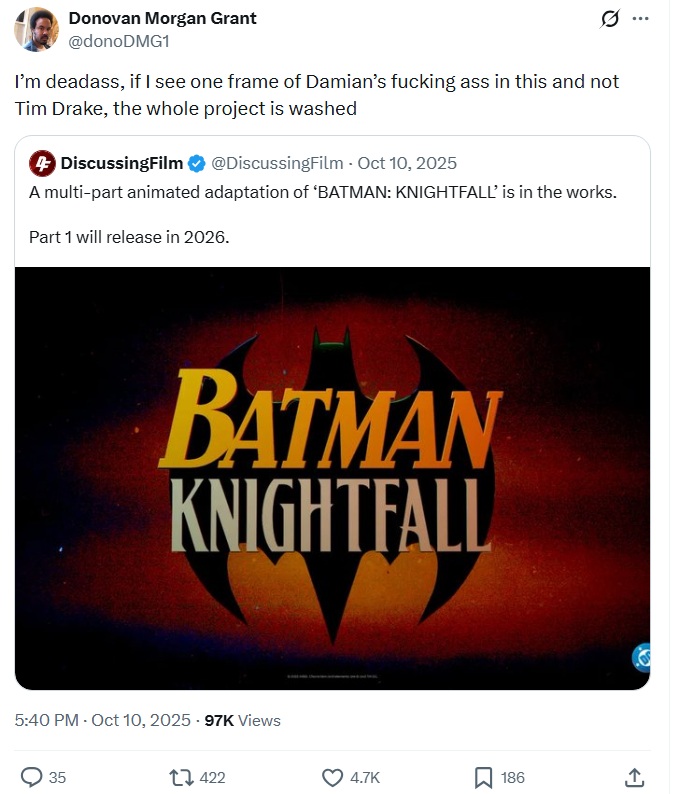
Online, I expressed my feelings calmly over the course of a few months, as more news was announced such as the release date and the logo, itself accurate to the trade dress of the original story complete with font and style of the symbol. That was a promising start, as the last couple decades of the franchise had been permeated with a look of the character that neither spoke to me nor embodied the vibe of those early 90s stories. Still, my demands were listed thusly:
- No Damian Wayne. Although Damian has enjoyed a swath of media appearances in the last decade, Knightfall is a big story for Tim Drake, the third Robin. Only a few months into the role (a couple of years in real publishing time), Tim’s freshness to the world provided a perspective that guided readers through the most harrowing parts of the arc, whether it be danger at the hands of Bane, AzBats or the city falling apart and Batman’s either burning himself out, crippled or crazy. It was important that Tim be kept in the story, not to mention the fact that the character barely has any media footprint aside from The New Batman Adventures and Young Justice. While Damian Wayne has his fans, his popularity shouldn’t have dictated his presence in stories he didn’t belong (like the adaptation of Hush).
- No Harley Quinn. Less of a dealbreaker, but Harley Quinn is a breakout character who nearly rivals Batman in popularity, and there’s simply no room for her in this story. While she was created ’round the same time Knightfall was originally published in Batman: The Animated Series, she wasn’t inducted into mainstream comic continuity until the mega-arc No Man’s Land in 1999. I don’t dislike the character, but depending on how she’s used, she can quickly become a big distraction.
- No single Bat-Symbol. Back in the pre-2000s, I remembered thinking Batman looked cooler without the yellow oval emblazoned on his chest. I was a fool. The single bat design – once an indicator for stories told in Batman’s past pre-Batgirl – was brought back as his main look at the end of No Man’s Land, and popularized after the top-selling Jeph Loeb and Jim Lee storyline Hush. Despite brief intervals like Grant Morrison’s Batman Inc., Batman hasn’t worn the yellow oval since the start of the 21st century. But the oval is more distinctive, and far more recognizable as the symbol for the character, thanks in large part to the 1989 Batman movie. Above all else, that’s what he was wearing during Knightfall. Similarly…
- No short ears. Another consequence of Hush’s success, and I should blame Frank Miller for these last two points, as his design in Dark Knight Returns was the inspiration for Lee’s Batman. But the 90s were unquestionably Batman’s wildest time for ear length, and while few of us will say with our whole chest we want the Kelley Jones look where they’re taller than a top hat, short-eared Batman has no rizz compared to the length of a shadowy figure creeping along the night. And again, he didn’t have them in the original story.
But there was nothing I could do. Warner Bros were gonna make the movie however they saw fit, and my adoration for the saga and pounding heart for emotional accuracy wouldn’t mean a damn thing for how it would be directed. Moreover, Knightfall had been one of the most requested stories for adaptation for decades, ever since it first arrived in comic stores in the mid-nineties. Fans have been yearningto see the events translated onto the screen since 1997’s Batman and Robin. With opinions ultimately mixed on 2012’s The Dark Knight Rises (where Tom Hardy’s Bane seemingly breaks Batman’s back but really only pops it out of place for a scene), this would be a true, blue adaptation of the material, told over the span of three movies.
So how did it end up?


