WHAT THEY TOOK FROM US…
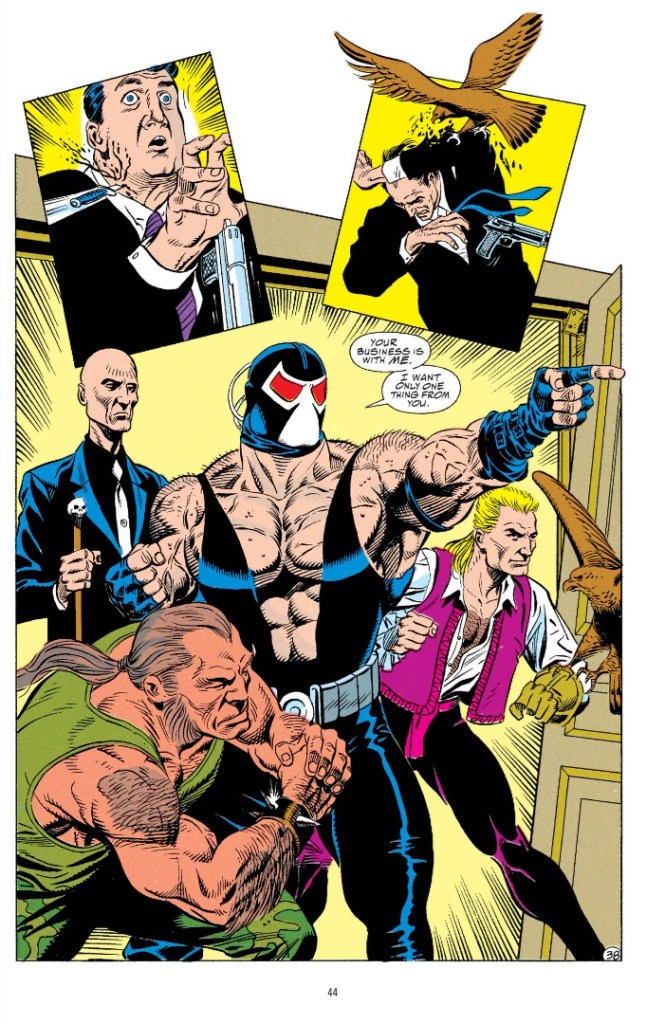
One of the major elements completely absent in the animated film is Bane’s posse: Bird, Trogg and Zombie. Having joined up with him during his stint at Peña Duro, they accompany Bane throughout the first half of the events of the Knightsaga, and are present in most issues save for the Robin and Bane story and Batman #497. Bird was the criminal from Gotham who informed Bane of Batman’s legend. He’s a falconer whose trained bird Talon ran reconnaissance for them and often spied on Batman’s battles from afar. Trogg was a muscle-bound bruiser who was also surprisingly good at electronics. And Zombie was a criminal chemist who provided Bane with the Venom compound delivered through the intravenous tubes into his skull. He’s actually the narrator of Vengeance of Bane, describing the events of his birth and life as though he were a mythological figure.
I understand the decision to cutting them out of the movie. Although they don’t complicate the plot at all, much of the film requires the mystery to be solved by Robin. His scenes with Jean-Paul help familiarize the audience with them as characters, since they’ll become more prevalent in the following two films. Pressing the time constraints of the movie would’ve necessitated time spent on more dialogue with more roles. Presumably, Anson Mount, Michael Mando and David Dastmalchian are not cheap. Excising the three goons could’ve not only saved money on voice actors but also freed up time and funds on the animation, which looks amazing throughout the movie. Unfortunately, it robs the film of some of my favorite moments from Knightfall, such as Batman running the gauntlet before facing Bane.
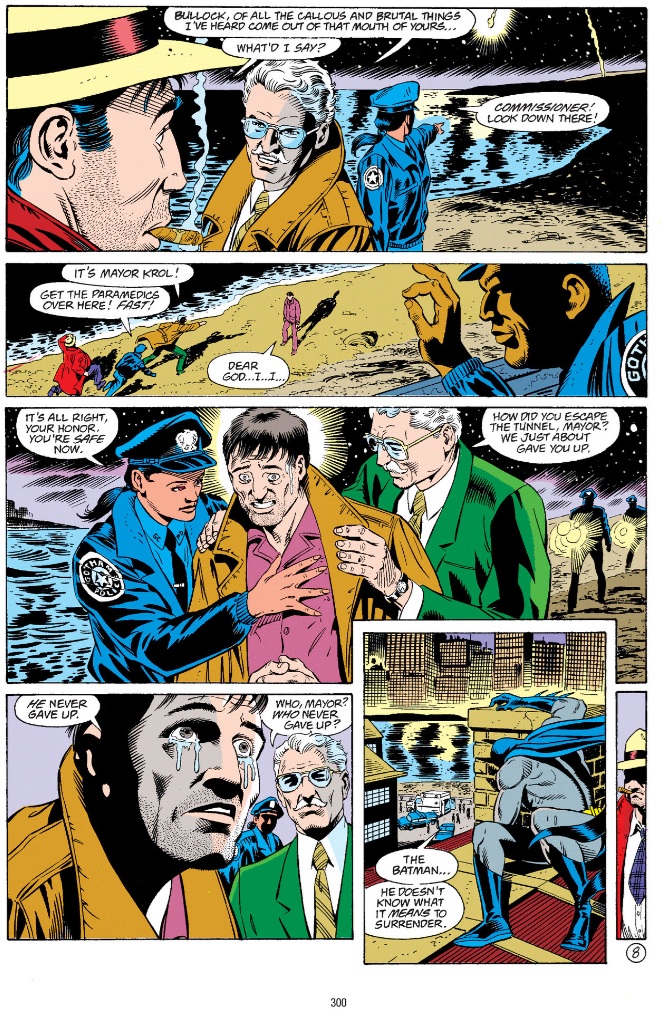
Another subplot removed was everything to do with the Gotham City Mayor, Armand Krol. In the beginning of Knightfall he admonishes Gordon for relying too much on Batman, and pressures him to round up the escaped Arkham inmates ASAP. Later, he’s kidnapped by Joker and Scarecrow, and their taunting torture of him takes up several scenes. Eventually, Batman prioritizes rescuing him, leading to some of the very best Batman issues ever published. After Batman is defeated and AzBats succeeds him, Krol ignores Gordon’s concerns that the man beneath the mask isn’t behaving the same way, even when Batman begins dressing in razor-sharp armor. Krol would soon replace Gordon with his wife Sarah Essen, catch The Clench and later die from a mutated strain. As far as Gotham mayors go, he lasted longer than most. But for the majority of his appearances he was too often a hard-headed incompetent.
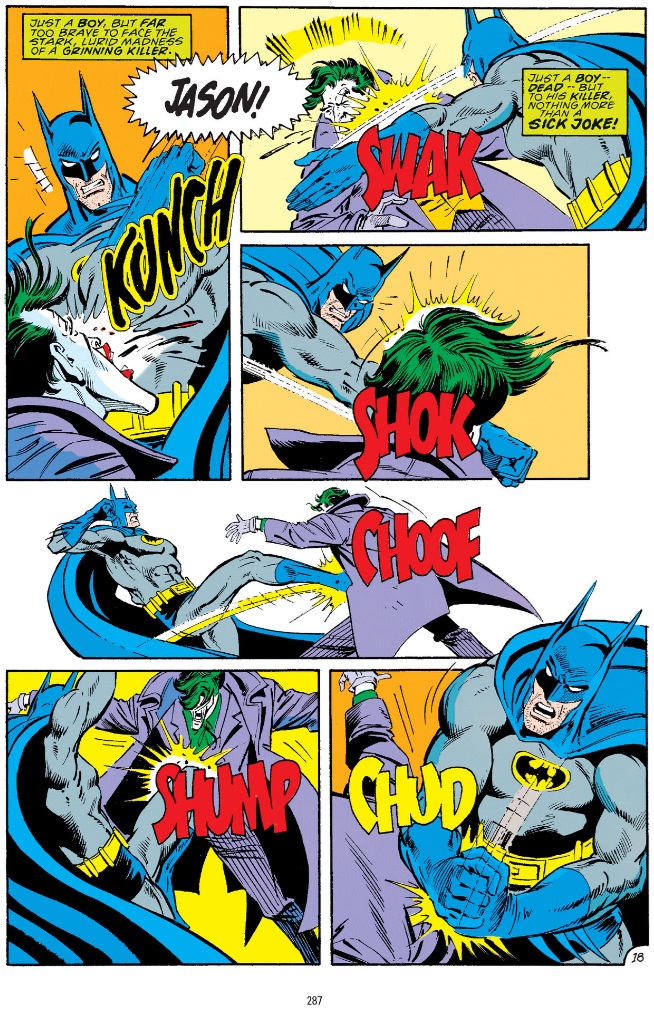
One of the major scenes left out in the adaptation is everything that occurs in Batman #496.
After apprehending Firefly, Batman goes to rescue Krol, with the murder of Jason Todd by the Joker at the forefront of his mind. When he arrives at the Gotham River Tunnel, he’s immediately gassed by Scarecrow and hallucinates Jason dying. But instead of making him afraid, this only pisses him off. What follows is one of the most deliciously satisfying beatings in western literature, as Batman brutalizes The Joker for several pages, screaming Jason’s name out loud. With both supervillains twitching on the ground, they opt to escape by blowing up the Tunnel River, forcing Batman to save Krol before the area floods.
This was partially nodded at in the film with the brief Scarecrow scene. It leads to a rattled Batman being forced to stop and sit with himself for a few moments. With the whole Krol/Joker/Scarecrow subplot removed completely, there was no saving this scene, despite fans yearning to see it brought to life for years. Still, I think more than the time constraints, what might’ve kept this from getting adapted was the presentation of a similar scene in the Hush animated film, where Batman beats Joker around after believing he’s killed Tommy Elliott. The emotionality of the scene is similar, and we know the Joker is going to appear in a subsequent film adapting the issue where he squares off against Jean-Paul. As a result, however, The Joker goes unmentioned and doesn’t appear in this entire first part. Not even the fact that he killed Jason Todd is brought up, which I find interesting.
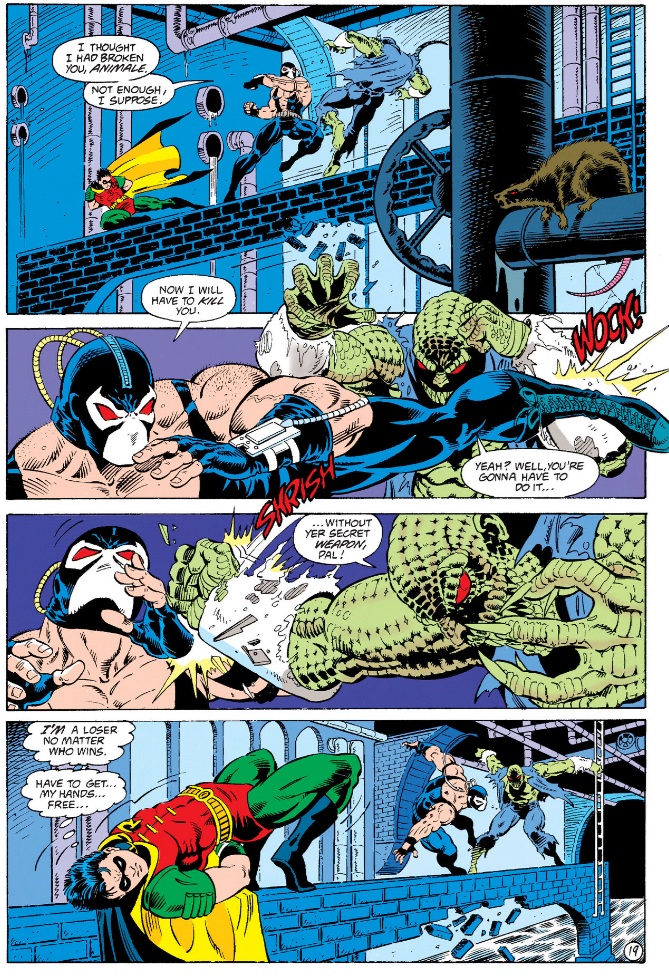
While the scene between Bane and Robin underground is largely similar to Detective Comics #660, the missing element is the presence of Killer Croc, who Bane crippled in an earlier issue and reappears seeking revenge. Again, there was no room to reference two fights between the same characters, and the scene needed to prioritize Tim handling himself in a life or death situation. It should also be noted that B:TAS loosely adapted this in their Bane episode, with Bane putting Croc in traction.
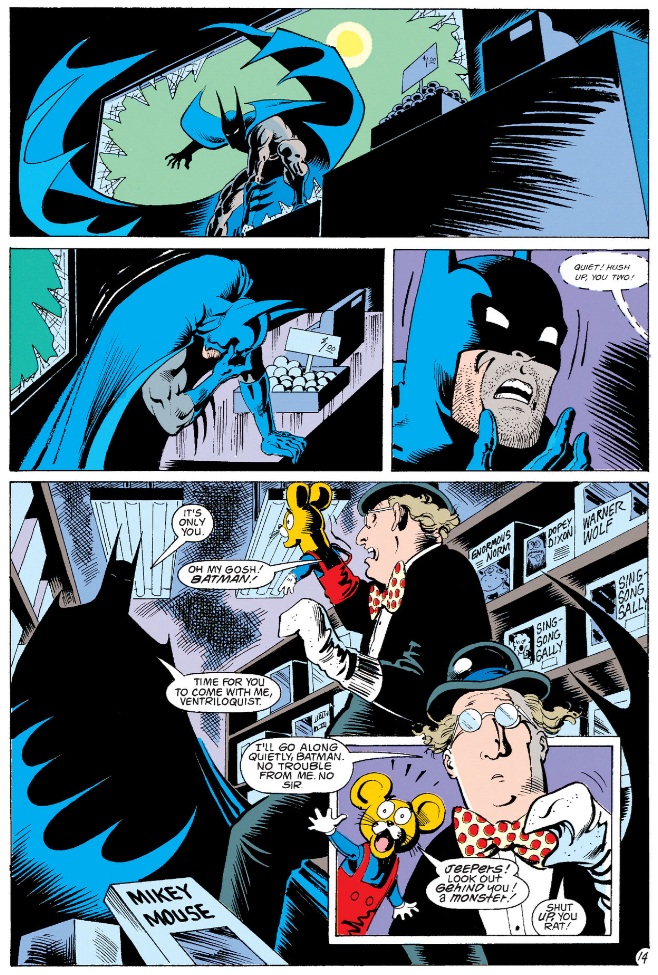
As opposed to the montage where Batman finds The Ventriloquist and Scarface together at a grocery store, in the comics the two were separated for a short time. A subplot of Ventriloquist enlisting the help of new dummy personas – including Socko, a literal sock puppet – to search for Scarface was naturally cut out of the movie. It would have been interesting to see the end to this plot animated, where Scarface and Socko argue and pull guns on each other, ignoring Ventriloquist’s protests as though he wasn’t the one shooting himself. Darkly comedic, it’s a scene that would’ve further earned the “R” rating.
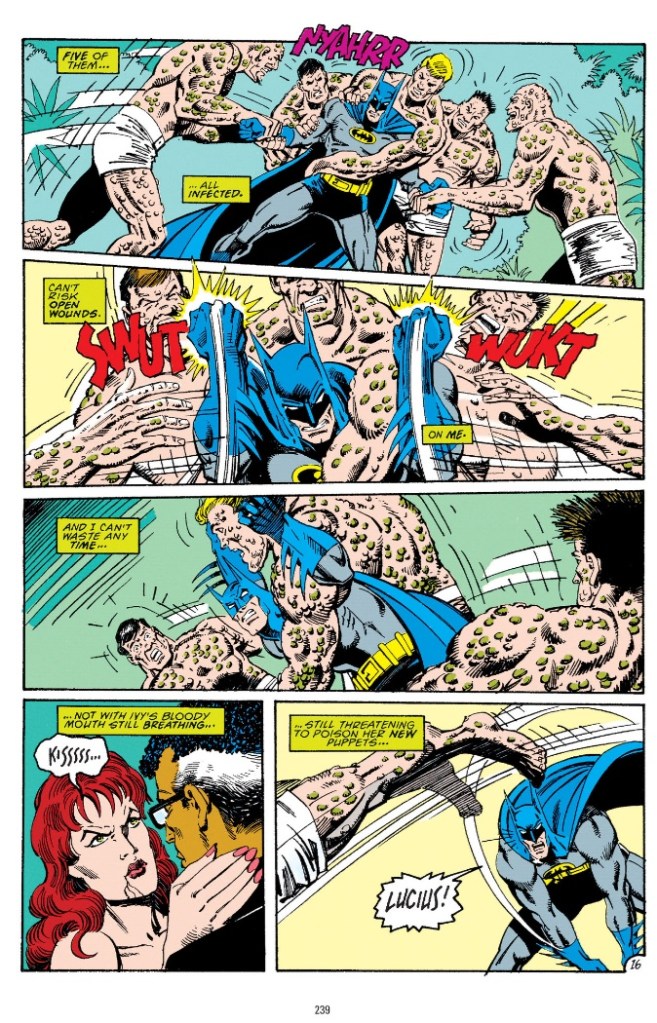
There were more characters that Batman fought in the comics, as opposed to Freeze and Catman. Minor villains such as Cornelius Stirk, The Cavalier and Amygdala were never going to be given much screentime, if any. The one major character excised was Poison Ivy. In Batman #495, she attacks a Wayne Foundation Charity Fund, nearly killing Lucius Fox before Batman throws a batarang at her mouth and kicks her in the face. Again, potential scenes for the “R” rating.
THE FINAL ANALYSIS…
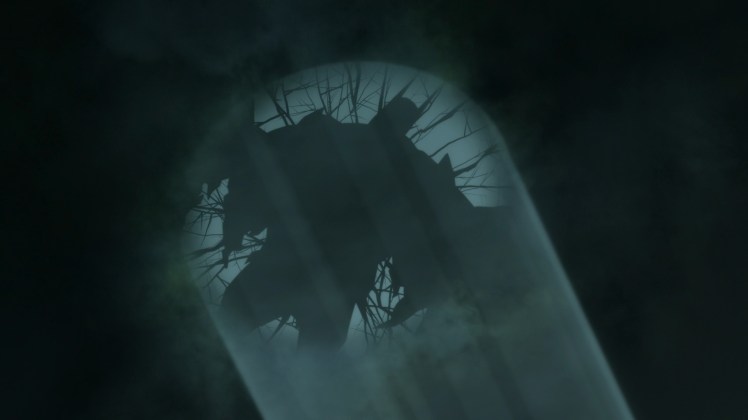
One scene that needed to be kept intact however was a moment that often goes unmentioned by most people: Bane throwing Batman off a building at Gotham Square. In the film, he throws him off GCPD headquarters onto a spotlight, to the audience of a gaping Gordon and Bullock, while Alfred, Tim, Shondra and the people of Gotham watch on live television. The movie fades out on the image of a broken bat – wordlessly embodying the title of this first third of the Knightsaga trilogy.
Knightfall (Part One – Knightfall) (hilarious title) is a strong adaptation, because it puts across all of the essential emotional beats, translating the story in a digestible way without trying to outthink or improve it – something the Hush and Long Halloween films attempted to do. Is it as good or better than the original comics? Not even almost, but it was never going to be. Watching this movie made me understand the strongest kind of adaptation would have to be a kind of sequential miniseries like a television season, fleshing out all of the beats and portray the missing characters like Bird or Krol or Socko. As it stands, however, this a better adaptation than The Dark Knight Returns, because it understands this Batman better than that one. Shondra tells him at the beginning of the film that he’s “a control freak with a messiah complex”, and that his insistence to help others without accepting help himself will eventually break him if he’s not careful. That theme of mental health and community has always been true to the character, true to Knightfall, and works as well today as it did in 1993. For a film where the overall positive reaction has been to Bane’s impressive portrayal and the beatdowns he delivers, its understanding of the subject matter is more thorough than most DC films, presenting a story that despite its violence is ultimately very wholesome. Of course, this is the first of a three part epic, and those themes must continue to echo for the project to stick the landing. With Knightfall (Part One – Knightfall), it’s off to a great start, and gets its foot in the door as an example of grasping the needs of a proper adaptation.
 Questions: We Don't Have Answers


